“Digital abuse is not merely ‘online harassment’—it is a calculated tool used to silence women, forcing politicians, activists, and students into digital silence. To protect democratic participation, we must move from slow, reactive complaint-handling to real-time prevention.“
In Kenya’s rapidly evolving digital landscape, social media and online platforms have opened unprecedented doors for civic engagement, political leadership, and advocacy. However, this digital frontier has also introduced a severe counter-threat: Technologically Facilitated Gender-Based Violence (TFGBV).
From coordinated “pile-on” attacks and doxing to the non-consensual distribution of intimate images (NCII) and sophisticated AI-generated deepfakes, digital violence disproportionately targets women in the public eye. Research shows that over 50% of female political aspirants experienced online abuse during the 2022 election cycle, while nearly 90% of university students in urban centers have witnessed or experienced digital harassment.
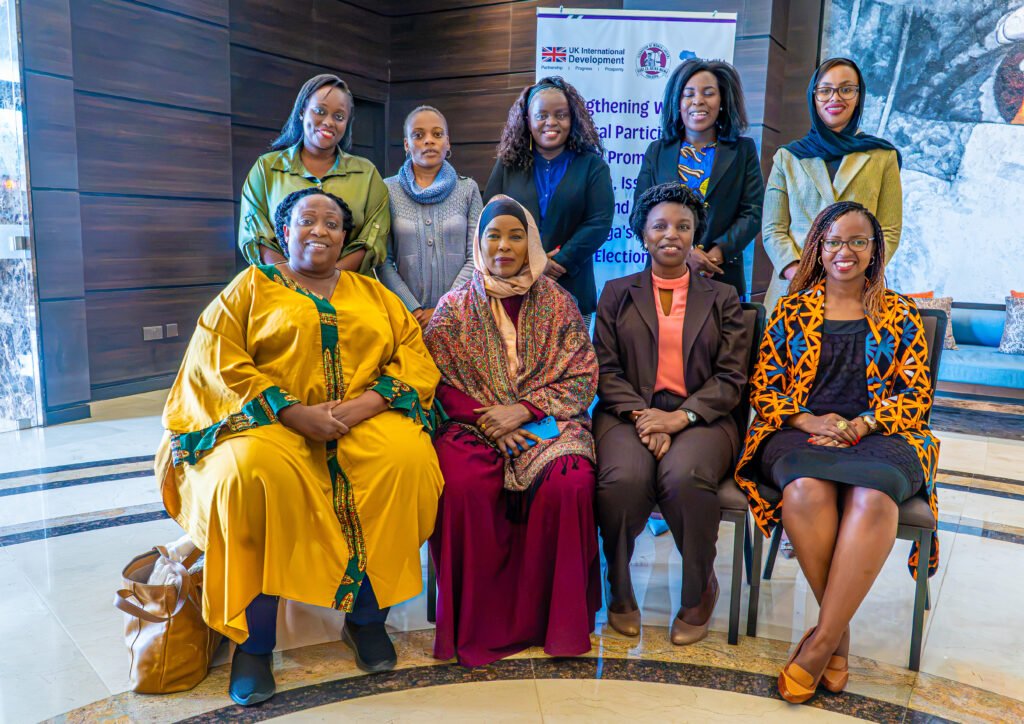
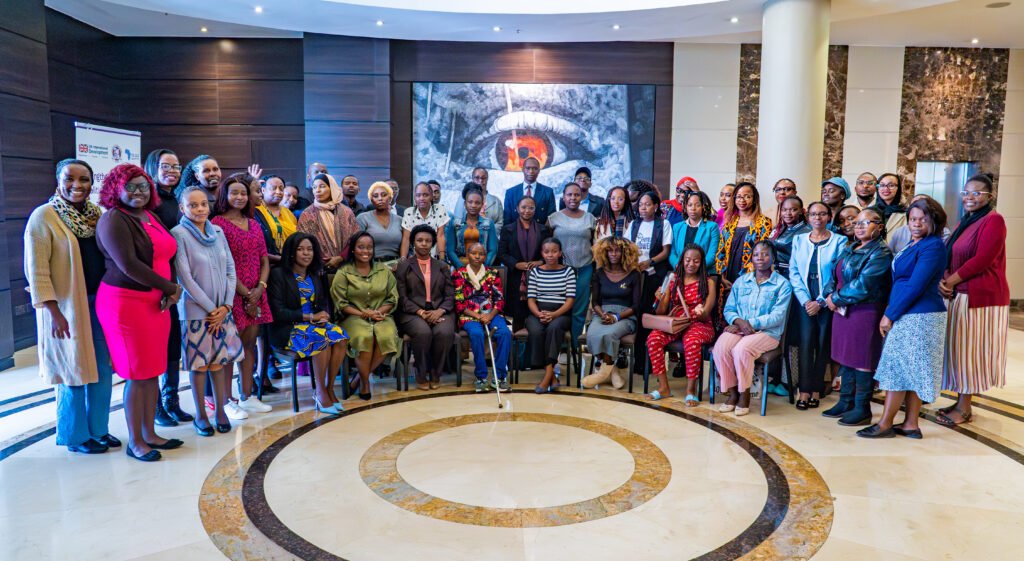
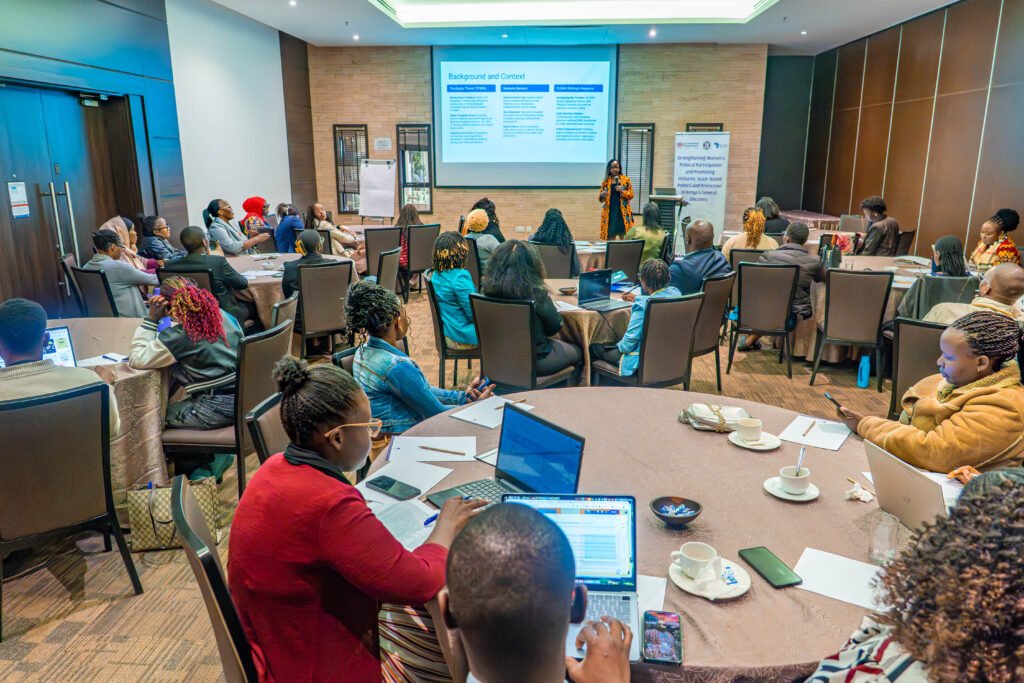
To address this crisis, Oron Collaborative was privileged to partner with the Electoral Law and Governance Institute in Africa (ELGIA) and FIDA-Kenya to develop and present the Anti-TFGBV Early Warning System (EWS) Framework. Last week, we successfully convened key stakeholders for a national validation workshop to review, stress-test, and refine this framework.
What is the Anti-TFGBV Early Warning System?
The Anti-TFGBV EWS is a specialized, survivor-centered digital infrastructure designed to detect, analyze, and mitigate online threats before they escalate into physical harm or permanent reputational damage.
Unlike traditional reporting mechanisms—which are often slow, fragmented, and re-traumatizing—the EWS bridges the gap between digital threat detection and real-world institutional response.
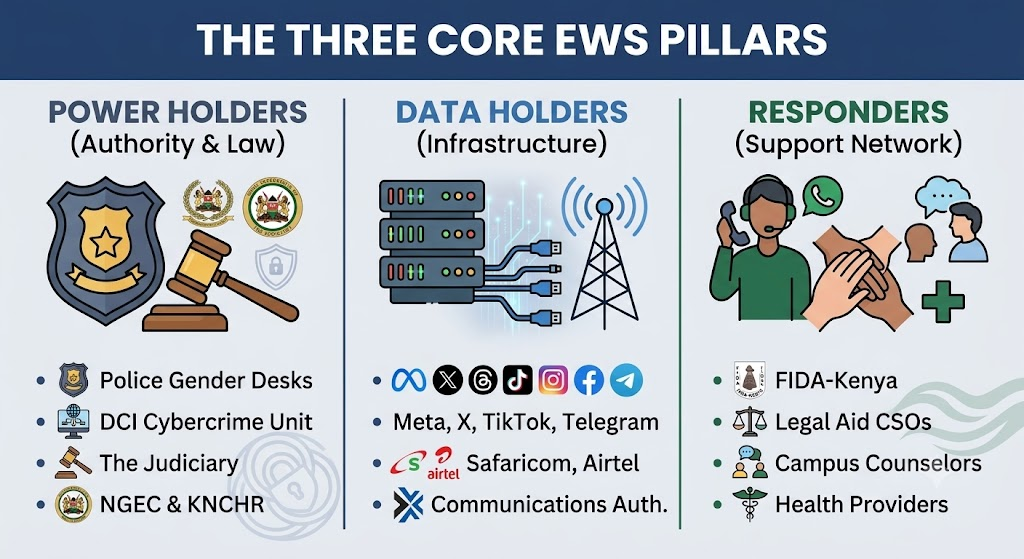
Key Elements of the Framework:
- Proactive AI and Metadata Analysis: Integrating backend tools (like Sensit-AI) to analyze hidden metadata, distinguish authentic media from AI deepfakes, and track local Sheng/Swahili slurs.
- The “Golden Hour” Mandate: Setting a strict 60-minute operational window from alert verification to immediate evidence preservation, threat triage, and psychosocial support.
- Hybrid Accessibility (Leaving No Survivor Behind): Ensuring the platform is accessible via a web portal (with an Incognito “Safe Exit” feature), a mobile app for responders, and a *free USSD code (XXX#) for women on basic feature phones or in low-connectivity areas.
- Court-Admissible Evidence Preservation: Automatically logging timestamps, URLs, and digital footprints compliant with the Computer Misuse and Cybercrimes Act (2018) so evidence isn’t lost if a post is deleted.
Key Highlights from the Validation Workshop
The validation workshop brought together diverse representatives across law enforcement (NPS/DCI), judicial officers, state commissions (NGEC, KNCHR, CA), civil society organizations, youth leaders, campus administrators, and tech policy experts.
Through plenary discussions, scenario stress-testing, and digital feedback submissions, stakeholders helped shape critical enhancements to the framework:
- Expanding Digital Inclusivity: The framework was updated to strictly comply with ICT Accessibility Standards for Persons with Disability, formally engaging the National Council of Persons with Disability (NCPWD) and United Disabled Persons of Kenya (UDPK).
- Standardizing Triage Protocols: Stakeholders established a shared risk-severity matrix. If an online threat indicates imminent physical stalking or domestic retaliation, the system prioritizes physical safety and extraction before executing digital content takedowns.
- Protecting Privacy & Preventing Surveillance Concerns: To ensure the tool never resembles intrusive surveillance, the system operates under strict “Privacy by Design” principles compliant with the Data Protection Act (2019). Features include end-to-end encryption, anonymous reporting personas, and a survivor’s statutory “right to be forgotten”.
- Training Frontline Responders: Stakeholders called for reviving specialized Police Gender Desk trainings, updating curricula to include digital forensics, and training campus WhatsApp group administrators as first-line responders.
Moving from Framework to Reality: What’s Next?
Validating the framework was a major milestone, but turning code and policy into a life-saving shield requires sustained action. Guided by a multi-year roadmap (2026–2028), the project is transitioning into its next critical phases:
- Months 1–3 (Pilot Inception): Executing county-level baseline mapping and signing binding MOUs with law enforcement, state commissions, and legal partners in Nakuru and Kisumu Counties.
- Months 4–6 (Technical Co-Design): Building the hybrid App, Web, and USSD interfaces with local Sheng/Swahili linguistic models and Incognito security features.
- Months 7–12 (Live Pilot & Evaluation): Deploying 24/7 EWS hubs, training 50 certified first responders per county, executing live incident triage, and conducting independent technical audits prior to national scaling.
Oron Collaborative’s Commitment
At Oron Collaborative, we believe that technological innovation must always be paired with human-centered empathy, legal accountability, and robust policy design.
We are proud to stand alongside ELGIA, FIDA-Kenya, and our partners across Kenya to build a digital ecosystem where women in politics, activists, students, and content creators can express themselves, lead, and thrive without fear of digital violence.
Want to learn more or partner with us on digital rights and survivor-centered technology solutions?
Reach out to the Oron Collaborative team or follow our social media channels for regular project updates!
#DigitalSafety #AntiTFGBV #WomenInLeadership #DigitalRights #Kenya #OronCollaborative #ELGIA #FIDAKenya